Introduction:
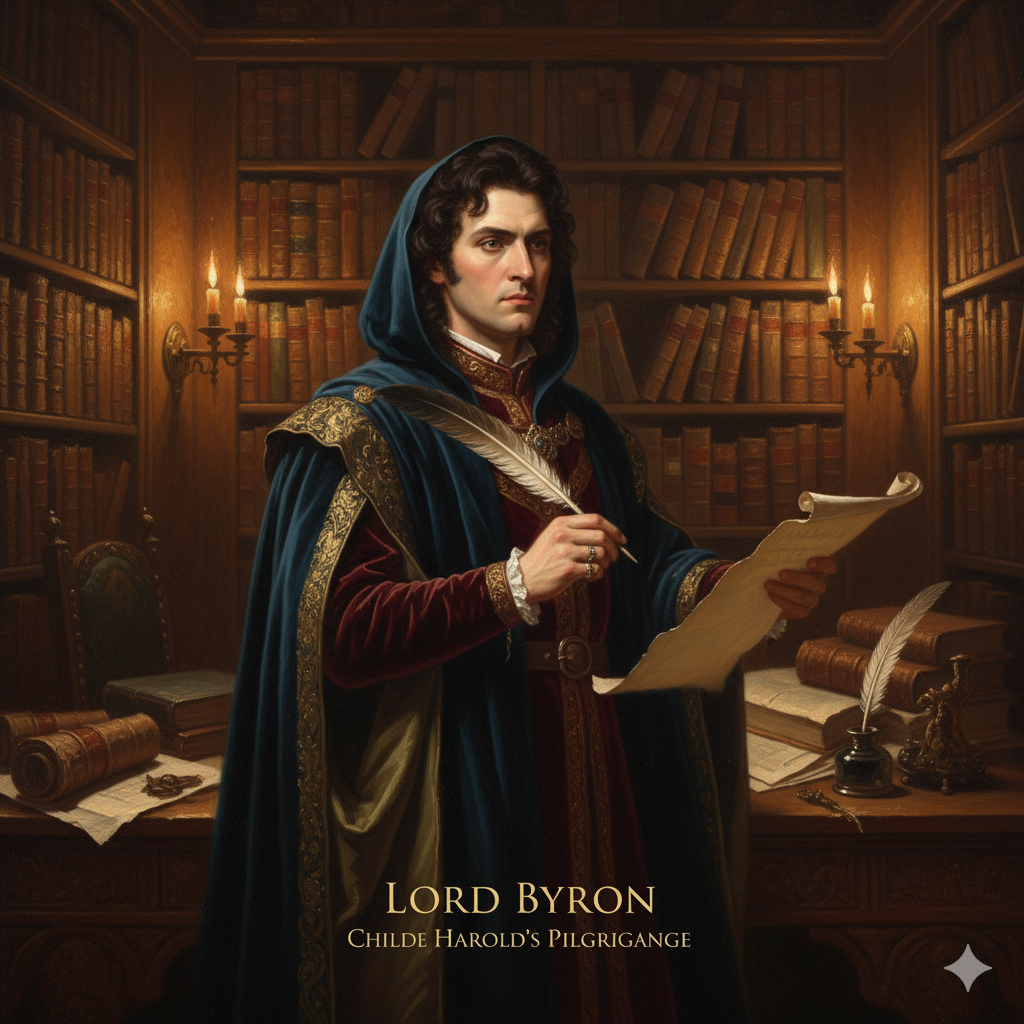
Lord Byron commonly known as vertical figure of Romantic Movement. He was not only a great poet, but also a revolutionary thinker who lived adventurous and passionate life, known for his striking personality and emotional intensity. Byron’s poetry reflects love, freedom, rebellion and the complex struggle of human nature.
Early Life and Education of Lord Byron:
Lord Byron was born on January 22, 1788, in London England into an aristocratic but financially troubled family. His father, Captain John Byron was a reckless and irresponsible man and his mother, Catherine Garden, came from Scottish nobility Byron inherited the little “Lord” at the age of ten when his great uncle died.
He attended Harrow school and later Trinity college, Cambridge. Where his poetic talent began to flourish. His first collection, “ Hours of Idleness(1807)”, received harsh critics but Byron responded fiercely with his satirical masterpiece English Bard and Scotch reviewers(1809), which instantly gained him literary fame.
Personal Life and Character of Lord Byron:
Byron’s personal life was as dramatic as his poetry. He was known for his romantic affairs, charm and defiant sprit. His scandalous relationship and controversial reputation made him a fascinating yet controversial figure in society.
He married Annabella Milbank in 1815, but the marriage soon collapsed, leading to separation and public gossip. Disillusioned by English society. Byron left England in 1816 – never to return.
Major works:–
Lord Byron’s literary career was rich and diverse. His worked combined passion, heroism and deep emotional reflection. His most notable creation include:
1.Childe Harold’s Pilgrimage (1812-1818)
2.The Giaour (1813)
3.The Corsair (1814)
4.Manfred (1817)
5.Don Juan (1819-1824)
The Byronic Hero:
One of the Byron’s most important contribution to literature is the creation of the Byronic hero .
This Character type – Dark brooding, Rebellious, proud and emotionally complex appears not only in his own works but also influence later writers likely Emily Bronte, Pushkin and even modern literature. The Byronic hero represents the poet’s own inner conflicts – passionate, intelligent but alienated from society.
Exile and later years:
After, leaving England, Byron traveled across Europe and settled in Italy for several years. During this period, he wrote some of his finest work and became involved with other great romantic writers like Percy Bysshe Shelley & Mary Shelley.
In his later life, Byron joined the Greek war of dependence against the Ottoman Empire, inspired by his Cove for freedom and justice. He spent his own fortune to support cause. Tragically, he fell ill and died of fever on 19, 1824 in Missolonghi, Greece at the age of 36.
Themes and Style of Lord Byron:
Byron’s poetry blends emotion and imagination, irony and rebellion. His verses explore love, nature , heroism and human imperfection.
He was a master of both lyrical and narrative poetry and his command of rhythm and satire made his work unforgettable. His poetic voice remains both personal and universal – reflecting the eternal struggle between desire and morality.
Legacy and Influence:
Lord Byron remains one of the most enduring figure of English literature. His influence extends beyond poetry shaping modern ideas of individually, artistic freedom and emotional honesty. His life itself became a legend: Bold passionate and full of contradiction.
Today he stands as symbol of romantic freedom and poetic courage, inspiring readers and writers for generations.
Pingback: W.B Yeats: The Mystic poet of Modern Ireland -
Pingback: Study of William Shakespeare Sonnet 116-Let me not to the Marriage of True Minds englitcorner.com
Pingback: 10 Powerful & Essential Ways Rhythm Shapes Meaning in Poetry englitcorner.com