Introduction – The Restoration Age in English Literature
The English Restoration marks one of the most fascinating turning points in English history and literature. In 1660, the monarchy returned to England after years of Puritan rule under Oliver Cromwell. When Charles II became king, England entered a new cultural period known as the Restoration Age. This era dramatically changed literature, theatre, poetry, and social life. Writers began focusing on wit, satire, realism, and human behavior instead of the religious seriousness that dominated earlier periods.
The Restoration Age (1660–1700) produced brilliant dramatists and poets such as John Dryden, William Congreve, and Aphra Behn. Theatre reopened, satire flourished, and literature became more worldly, intellectual, and entertaining.
In this blog, we will explore:
- Historical background
- Major characteristics of Restoration literature
- Important writers and works
- Restoration drama and comedy of manners
- Influence of the age on English literature
Historical Background of the Restoration Age
To understand Restoration literature, we must first understand the political situation of England before 1660. After the English Civil War, the monarchy was abolished and Oliver Cromwell ruled England under a Puritan government. During this time:
- Theatres were closed
- Entertainment was restricted
- Literature became serious and religious
However, after Cromwell’s death, the monarchy returned when Charles II became king in 1660. This event is called the English Restoration, because the monarchy was “restored.” Charles II spent many years in France during exile, so he brought French cultural influence, luxury, and entertainment back to England.
As a result:
- Theatres reopened
- Drama became popular again
- Writers focused on wit and satire
- Society became more relaxed and pleasure-loving
This new atmosphere shaped the entire literature of the Restoration period.
Timeline of the Restoration Period
| Year | Event |
|---|---|
| 1649 | Execution of Charles I |
| 1653 | Oliver Cromwell becomes Lord Protector |
| 1660 | Charles II restored to the throne |
| 1660 | Theatres reopen in London |
| 1665 | Great Plague of London |
| 1666 | Great Fire of London |
| 1700 | End of Restoration literary influence |
These historical events deeply influenced literature, politics, and social life.
Main Characteristics of Restoration Literature
Restoration literature had several unique features that made it different from earlier periods.
1. Wit and Intellectual Humor
The most famous feature of Restoration literature is wit. Writers used clever dialogue, irony, and intelligent humor to criticize society. Instead of emotional or religious writing, literature became sharp, logical, and humorous.
Example:
Restoration plays often included smart conversations and clever arguments between characters.
2. Satire
Satire became one of the most powerful literary tools. Satire means criticizing society, politics, or human behavior through humor and irony. One of the greatest satirical poets was John Dryden. Satire helped writers expose:
- political corruption
- social hypocrisy
- moral weakness
It made literature both entertaining and thought-provoking.
3. Realistic Representation of Society
Restoration writers focused on real-life behavior and social relationships. Instead of ideal heroes, literature portrayed:
- fashionable society
- aristocratic life
- romantic relationships
- social ambition
Many plays described London’s upper-class lifestyle.
4. Comedy of Manners
One of the most famous literary forms of the Restoration period is Comedy of Manners. Comedy of manners is a type of drama that satirizes the behavior and manners of high society. Characteristics include:
- witty dialogue
- romantic intrigue
- clever female characters
- criticism of social hypocrisy
Playwrights used comedy to expose the superficial lifestyle of aristocratic society.
5. Influence of French Culture
Because Charles II lived in France, French culture influenced English literature. French influence brought:
- elegance in language
- refined dramatic structure
- intellectual conversation
Writers also followed French classical rules of drama.
Major Literary Forms of the Restoration Age
The Restoration Age produced great works in several literary genres.
| Literary Form | Characteristics |
|---|---|
| Drama | Comedy of manners, satire, witty dialogue |
| Poetry | Satirical poetry, heroic couplets |
| Prose | Essays, criticism, political writing |
| Literary Criticism | Development of modern literary theory |
Drama became the most popular literary form of the period.
Restoration Drama
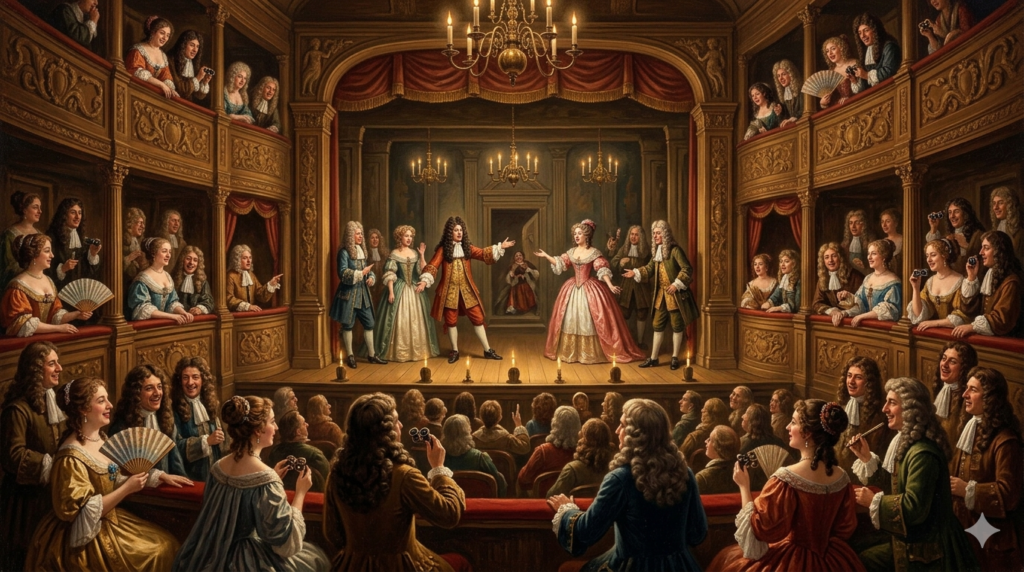
Drama reached a new level of popularity during this period.
Before 1660, theatres were closed by Puritan authorities. But after the restoration of monarchy:
- theatres reopened
- new playwrights emerged
- women were allowed to act on stage for the first time
Restoration drama can be divided into two types:
- Heroic tragedy
- Comedy of manners
Heroic Tragedy
Heroic tragedy was popular in the early Restoration period. These plays included:
- heroic characters
- love and honor
- noble conflicts
They were often written in rhymed heroic couplets.
One important playwright was John Dryden, whose plays helped define this style.
Comedy of Manners
Comedy of manners became the most famous dramatic form of the Restoration Age.
It focused on:
- romantic relationships
- social gossip
- fashionable London society
The characters were usually:
- witty gentlemen
- clever women
- hypocritical aristocrats
These plays entertained audiences while criticizing social behavior.
Major Writers of the Restoration Age
Many influential writers contributed to this literary period.
John Dryden
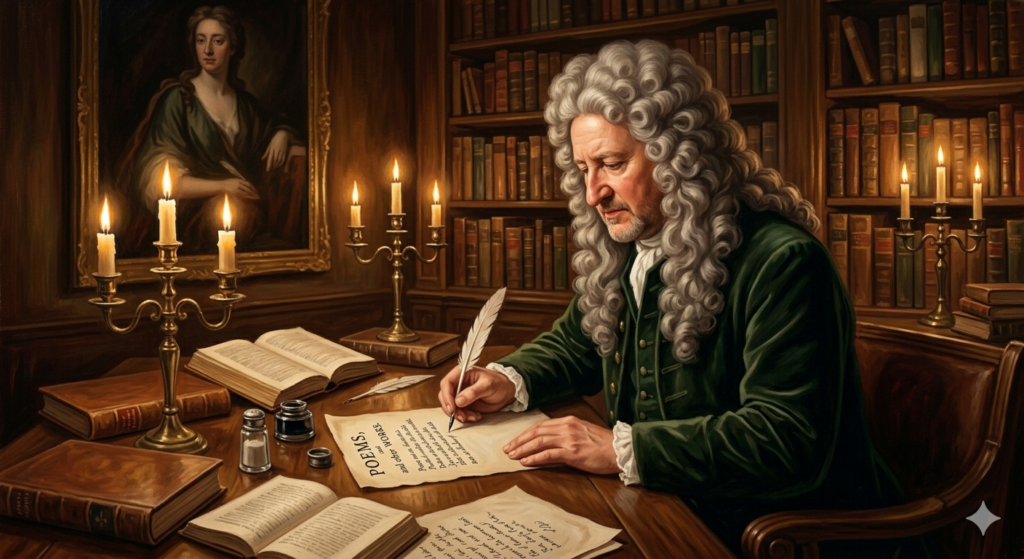
John Dryden is often considered the greatest literary figure of the Restoration Age.
He was:
- poet
- dramatist
- critic
Dryden perfected the use of heroic couplets in poetry.
Important works include:
- Absalom and Achitophel
- Mac Flecknoe
His writing combined politics, satire, and literary criticism.
William Congreve
William Congreve is famous for writing some of the best comedies of manners.
His most famous play is:
- The Way of the World
Congreve’s plays are known for:
- brilliant dialogue
- social satire
- clever female characters
Aphra Behn
Aphra Behn was one of the first professional female writers in English literature. Her work helped open opportunities for women writers. Her famous play:
- The Rover
Her writing often explored:
- love
- power
- gender relationships
Comparison: Restoration Literature vs Previous Period
| Feature | Puritan Period | Restoration Age |
|---|---|---|
| Tone | Religious and serious | Witty and humorous |
| Drama | Theatre banned | Theatre revived |
| Themes | Morality and religion | Society and pleasure |
| Style | Simple language | Elegant and satirical |
This shift shows how literature reflects social and political change.
Language and Style of Restoration Literature
The language of Restoration writing is known for:
- elegance
- clarity
- wit
- intellectual tone
Many writers preferred balanced sentences and logical arguments.
Poetry commonly used the heroic couplet form.
Social Life Reflected in Restoration Literature
Restoration literature closely reflected the social life of London. Themes often included:
- courtship and marriage
- fashion and luxury
- political gossip
- social ambition
Writers observed society carefully and used literature to criticize and entertain audiences.

The Restoration period played a major role in shaping modern English literature. It introduced:
- modern literary criticism
- realistic social drama
- sophisticated satire
The witty dialogue and social commentary of this era influenced later writers such as Alexander Pope and Jonathan Swift.
Conclusion
The Restoration Age represents a fascinating moment in English literary history. After years of strict Puritan control, literature suddenly became vibrant, witty, and socially engaged. The reopening of theatres, the influence of French culture, and the intellectual energy of writers like John Dryden, William Congreve, and Aphra Behn created a new literary atmosphere.
Restoration literature celebrated wit, satire, and human behavior, making it one of the most entertaining and intellectually stimulating periods of English literature. Even today, the themes explored during this period—social hypocrisy, romantic relationships, and political satire—remain relevant in modern literature. Understanding the Restoration Age helps us see how literature reflects the changing values of society and the evolution of cultural expression
Key Points
- Restoration Age began in 1660 with Charles II
- Theatres reopened after Puritan rule
- Satire and wit dominated literature
- Comedy of manners became popular
- Major writers include John Dryden, William Congreve, and Aphra Behn