Introduction
The Renaissance in English Literature marks one of the most exciting and creative periods in the history of human thought originating in Italy during the 14th century and spreading to England by the 16th century, it brought a new spirit of inquiry, humanism and artistic expression.
The word Renaissance means ‘ Rebirth’ reflecting the revival of classical learning, art and culture after the long medieval period.
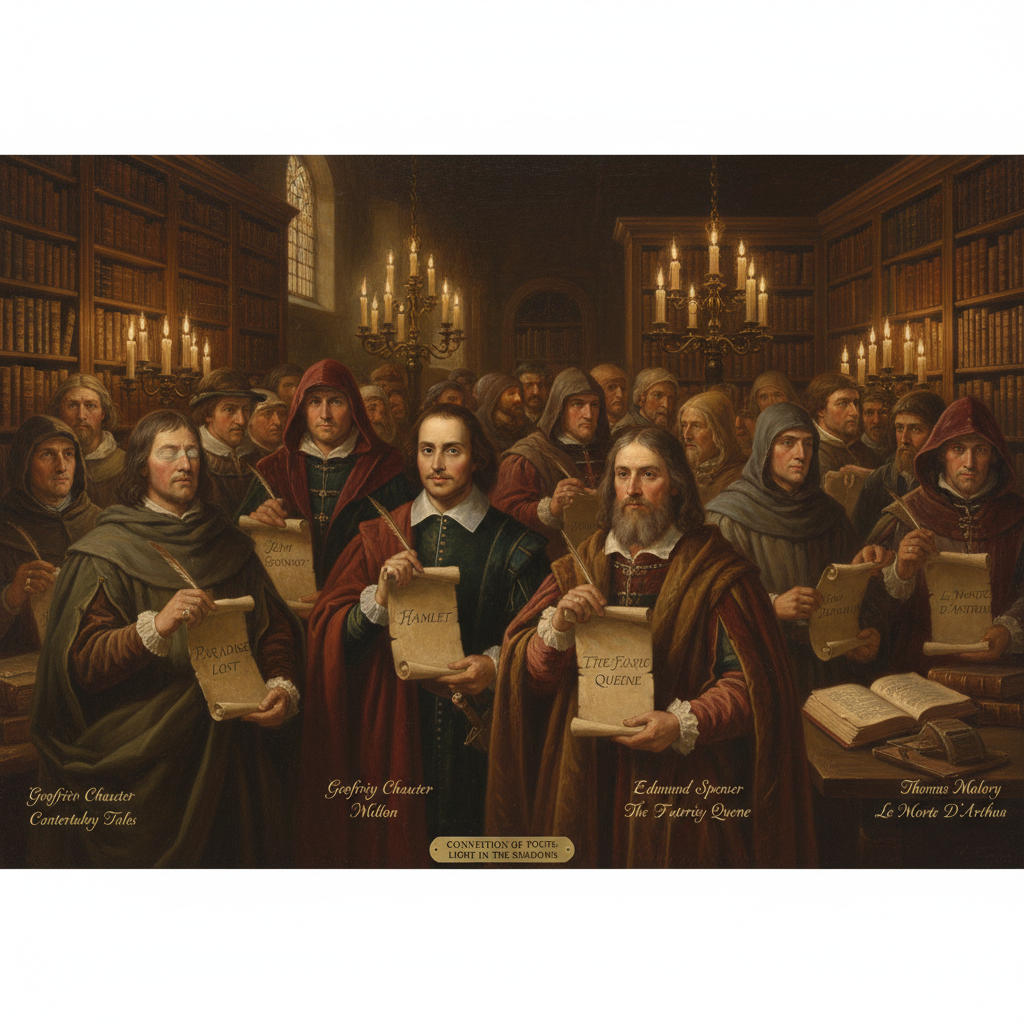
Background of the Renaissance
The Renaissance began in Italy with the rediscovery of Ancient Greek and Roman texts. Thinkers like Petrarch and Erasmus, inspired people to focus on human potential rather than only religious devotion.
In England the the movement gained momentum during the reign of Queen Elizabeth I. when trade, education and exploration flourished. The printing press invented by Johannes Gutenburg played a major role in spreading knowledge and ideas rapidly.
Major Charcteristics of the English Renaissance
- Humanism: Focus on human values reason and individual achievement.
- Revival of Classical Learning: Study of ancient Greek and Roman Literature and Philosophy.
- Growth of Vernacular Literature: Writers began using English instead of Latin.
- Love for Beauty and Art: Renaissance works celebrated nature, art and human emotion.
- Rise of Drama and Poetry: Theatre and sonnet sequences became culture centres.
Major Writers of the English Renaissance
- Sir Thomas More (1478-1535) : known for his work Utopia. More depicted on ideal society based on equality and justice. His writings reflect humanist ideals and moral philosophy.
- Sir Philip Sidney (1554–1586) : A courtier and poet Sidney wrote Astrophel and Stella and An Apology for Poetry, defending literature as a tool for moral improvement.
- Edmund Spenser(1552–1599) : Often called “ the poet’s poet” Spenser’s masterpiece The Faerie Queenie combines allegory and nationalism, celebrating the virtues of Elizabethan England.
- William Shakespeare(1564–1616) : The great dramatist of the age, Shakespeare’s works from Hamlet to Romeo and Juliet – capture human emotions, politics and imagination with unmatched depth.
- Christopher Marlowe (1564-1593) : known for Doctor Faustus, Marlowe introduced the powerful blank verse and tragic heroes who questioned destiny and divine authority.
- Ben Jonson(1572–1637) : A cotemporary of Shakespeare, Jonson wrote satirical comedies like Volpone and The Alchemist, focusing in human policies ans social hypocrisy.
Themes and Literary Trends:
- Individualism: Emphasis on personal identity and moral choices.
- Religion v/s Reason: struggle between faith and rational thought.
- Exploration and Discovery: Reflection of England’s maritime expansion.
- Idealism and Nationalism: writers glorified the English spirit.
- Romantic Love: Poet’s celebrated beauty and passion in Sonnets songs.
Impact of the Renaissance on English Literature:
The Renaissance changed English Literature forever. It gave birth to new forms like the sonnet, essay and blank verse. The use of the English language became richer and more flexible.
Drama flourished leading to the constructions of theatre such as The Globe. Most importantly it inspired later generations of poets and thinker to explore human emotions to intellect freely.
Conclusion:
The Renaissance wasn’t merely a historical period but a cultural awakening that redefined the English imagination. Through art, poetry and drama, it gave voice to the individual and transformed English Literature into a global treasure.
The influence of Renaissance writers continues to inspire students, scholars and lovers of literature around the world.
Pingback: Samuel Taylor Coleridge: Life, Works of a Romantic Visionary
Thank you for giving such a easy and simple notes…
Pingback: The use of nature in Romantic Poetry: Emotion, Spirit & Imagination - englitcorner.com
Pingback: John Keats: The Poet of beauty and Romantic Imagination
Pingback: William Shakespeare: The Mind That Shaped World Literature Forever
Pingback: “William Shakespeare: The Genius Who Reshaped World Literature Forever”
Pingback: 10 Powerful & Essential Ways Rhythm Shapes Meaning in Poetry englitcorner.com